Shopify Experts Costs Breakdown for 2026

The digital commerce landscape of 2026 bears little resemblance to the monolithic structures of the early 2020s.
For many Shopify operators, the most pressing question is simple: what does it cost to hire a Shopify expert? When technical limitations or sluggish conversion rates begin to impact revenue, bringing in a professional can be the turning point for your business—but understanding the necessary investment is critical.
Here’s a quick overview of Shopify expert costs in 2026:
- Hourly Rates: Typically $50 to $250+ per hour globally. Offshore talent starts around $15/hr, while senior US architects command $150–$250+/hr.
- Project-Based Pricing: Ranges from $475 for small tweaks to $150,000+ for enterprise builds.
- Small tasks (theme edits): ~$475 (e.g., via Storetasker/UpWork/Fiverr).
- Mid-Market Builds: $15,000 – $30,000.
- Complex services (Headless/Enterprise): $60,000 – $150,000+.
- Retainers: Monthly support packages typically range from $1,000 to $10,000+ depending on scope (e.g., Technical SEO, CRO, or continuous development).
- Freelancers: Generally charge $30 to $150 per hour, often offering a 30–50% discount compared to agency rates.
- Agencies: Premium rates with project minimums often starting at $10,000 – $20,000. Full enterprise migrations typically range from $80,000 to $150,000+.
Shopify Expert Hourly Rates by Region

The price of Shopify talent is heavily influenced by global economic arbitrage.
While remote work is standard, distinct pricing tiers persist based on cost of living, time-zone synchronicity, and the maturity of the local partner ecosystem.
| Region | Junior Developer | Senior/Architect | Strategic Value |
|---|---|---|---|
| North America (US/Canada) | $50 - $75 / hr | $150 - $250+ / hr | Cultural fluency, time-zone alignment, legal security. |
| Western Europe (UK/DE) | $45 - $70 / hr | $100 - $150+ / hr | GDPR compliance, high-end design, fintech expertise. |
| Eastern Europe (Poland/UA) | $40 - $60 / hr | $100 - $150 / hr | High technical rigor (STEM focus), headless specialization. |
| Latin America | $30 - $50 / hr | $85 - $120 / hr | Real-time US collaboration, growing React/Node.js skills. |
| Asia (India/Vietnam) | $15 - $25 / hr | $40 - $80 / hr | Volume, efficiency, and 24/7 support coverage. |
What is a Shopify Expert and Why Should You Hire One?
In 2026, the term "Shopify Expert" has evolved. It no longer refers to a generalist, but encompasses a wide spectrum of professionals—from Liquid developers, Headless developers, shopify app developers to AI workflow architects—who navigate the platform's increasingly complex ecosystem.
The primary reason to hire an expert today is strategic agility. While AI and "no-code" builders have commoditized basic store creations and setups, standing out in a global market requires high-level architecture. You hire an expert not just to "build a store," but to navigate complex API limits, leverage Shopify's ecosystem for your business, manage cross-border complexities like Markets or enable B2B sales with Shopify Plus
The Benefits of Partnering with a Pro
Partnering with a Shopify expert in 2026 is an investment in your brand's technical agility. Beyond simple task completion, expert partners provide the architectural foundation required to scale in an era of agentic commerce.
- Access to Enterprise Architecture: Experts unlock the full potential of Shopify’s platform handling complex API integrations and headless builds (Hydrogen/React) that are impossible for standard store owners to manage.
- Advanced Security & Compliance: In a global market, experts ensure your store adheres to strict data privacy regulations (like GDPR in Europe) and secures customer data against evolving threats.
- Technical SEO Mastery: Shopify presents unique SEO challenges regarding URL structures and duplicate content. Experts implement technical strategies that drive organic traffic, often managing this via monthly retainers.
- Conversion Rate Optimization (CRO): Experts don't just design; they perform "conversion engineering." By analyzing user behavior and implementing data-driven checkout flows, they turn visitors into revenue. Need this now? Check out our Conversion Rate Optimization Services.
- Risk Mitigation (The "Bus Factor"): When a critical bug takes down your checkout, an expert provides immediate diagnostics and fixes. Agencies offer a "bench" of talent, ensuring zero downtime even if your primary developer is unavailable.
- Future-Proofing: The market is bifurcating. Experts keep you ahead of the curve by integrating the latest tools like AI agents and automated workflows, ensuring your store remains modern while competitors lag behind.
Types of Shopify Experts You Can Hire
The term "Shopify Expert" is a broad umbrella. To spend your budget wisely, you must hire for the specific role that matches your technical needs. Here's an example of what Shopify experts do:
- Front-End Developers (Liquid vs. Headless):
- Liquid Developers: Specialize in Shopify’s native theme engine for standard store setups. Rates are often lower ($25–$75/hr) due to AI automation.
- Headless Specialists: Full-stack engineers who build custom frontends using React or Hydrogen. These experts command premium rates ($120–$250+/hr) and are essential for unique, app-like experiences.
- App Developers: These engineers handle the "heavy lifting" behind the scenes—complex data migrations, custom private apps, and ERP integrations (e.g., NetSuite). They ensure your data flows securely between systems.
- Shopify Designers (UI/UX): Modern designers focus on "conversion engineering" rather than just aesthetics. They understand mobile-first interfaces and accessibility standards (ADA/WCAG) to ensure every pixel drives sales.
- SEO Specialists: Unlike general marketers, Shopify SEO experts focus on technical site audits, solving platform-specific issues like canonical tags and site speed (Core Web Vitals) to improve rankings.
- Shopify Plus Experts: These are elite partners vetted for enterprise-scale merchants. They specialize in high-volume traffic, global expansion ("Markets Pro"), and complex B2B wholesale channel setups.
How much Shopify Experts Costs?
For defined scopes, most agencies and freelancers prefer project-based pricing. This shifts the risk from you (paying for hours) to the expert (delivering a result).
In 2026, project costs have risen for complex work due to the scarcity of senior architects capable of navigating components like "Markets Pro" and headless APIs.
- Mid-Market Custom Builds: For a brand generating ~$2M GMV needing a custom theme refresh and speed optimization, expect a budget of $15,000 – $30,000.
- Enterprise Migrations (Shopify Plus): Moving from platforms like Magento to Shopify Plus is a massive undertaking involving data migration for thousands of SKUs and ERP integrations (e.g., NetSuite). These projects now typically range from $80,000 to over $150,000.
- Headless Architecture: If you require a unique, app-like mobile experience using a complex frontend, the capital investment is significant. Costs generally fall between $60,000 and $120,000, with ongoing maintenance costs of $2,000–$5,000 per month.
Retainers and Ongoing Support
Once your store is live, "set it and forget it" is not a strategy. Retainers ensure your site evolves with customer demands. In 2026, retainers often focus on Conversion Rate Optimization (CRO) and technical growth rather than just maintenance.
- General Maintenance: $1,000 – $3,000 / month covers basic updates, bug fixes, and minor feature additions.
- Technical SEO: $1,000 – $10,000 / month is standard for experts managing complex URL structures, duplicate content issues, and backlink strategies.
Our Solution: If you need a dedicated partner to turn traffic into revenue, explore our Conversion Rate Optimization Services. We specialize in data-driven design changes that pay for themselves.
Key Factors That Influence Shopify Expert Costs
Why does one expert charge $50/hr and another $250/hr? It usually comes down to three factors.
Specialization: Shopify Online Store 2.0 (Liquid) vs. Headless
The "Shopify Expert" title is broad.
- Liquid Developers: Work with standard themes. Rates are lower ($25–$75/hr) due to competition from AI tools and page builders.
- Headless Shopify Developers: Full-stack engineers (React, Node.js). Rates are significantly higher ($60–$250+/hr) due to scarcity and the complexity of managing independent hosting infrastructure.
- Shopify App Developers: Full-stack engineers (often utilizing Remix, Node.js, or React). Rates are premium ($60–$250+/hr) because they build custom backend functionality that standard themes cannot handle, such as complex ERP integrations, private middleware, or bespoke subscription logic.
Geography and "Strategic Alignment"
You aren't just paying for code; you are paying for reliability and communication.
Global Arbitrage Pricing is primarily a function of the developer's local cost of living. A senior architect in New York must cover significantly higher operational overhead than a peer in Vietnam or Poland, creating unavoidable price disparities.
The Strategic Premium North American, Australian and UK agencies charge a premium for cultural fluency, time-zone synchronicity, and legal accountability. For enterprise brands, paying for a partner who understands Western retail trends and data privacy laws (like GDPR) is often non-negotiable.
The Hidden Cost of "Cheap" Devs While rates under $25/hr are tempting, they often strip away essential safety nets.
- The "Bus Factor": Freelancers typically work alone. If they get sick or disappear, your project stalls immediately.
- Lack of QA: Low-cost providers rarely include Quality Assurance testing or Project Management in their rates, forcing you to test the code and manage the timeline yourself.
How to Find and Hire the Right Shopify Expert?
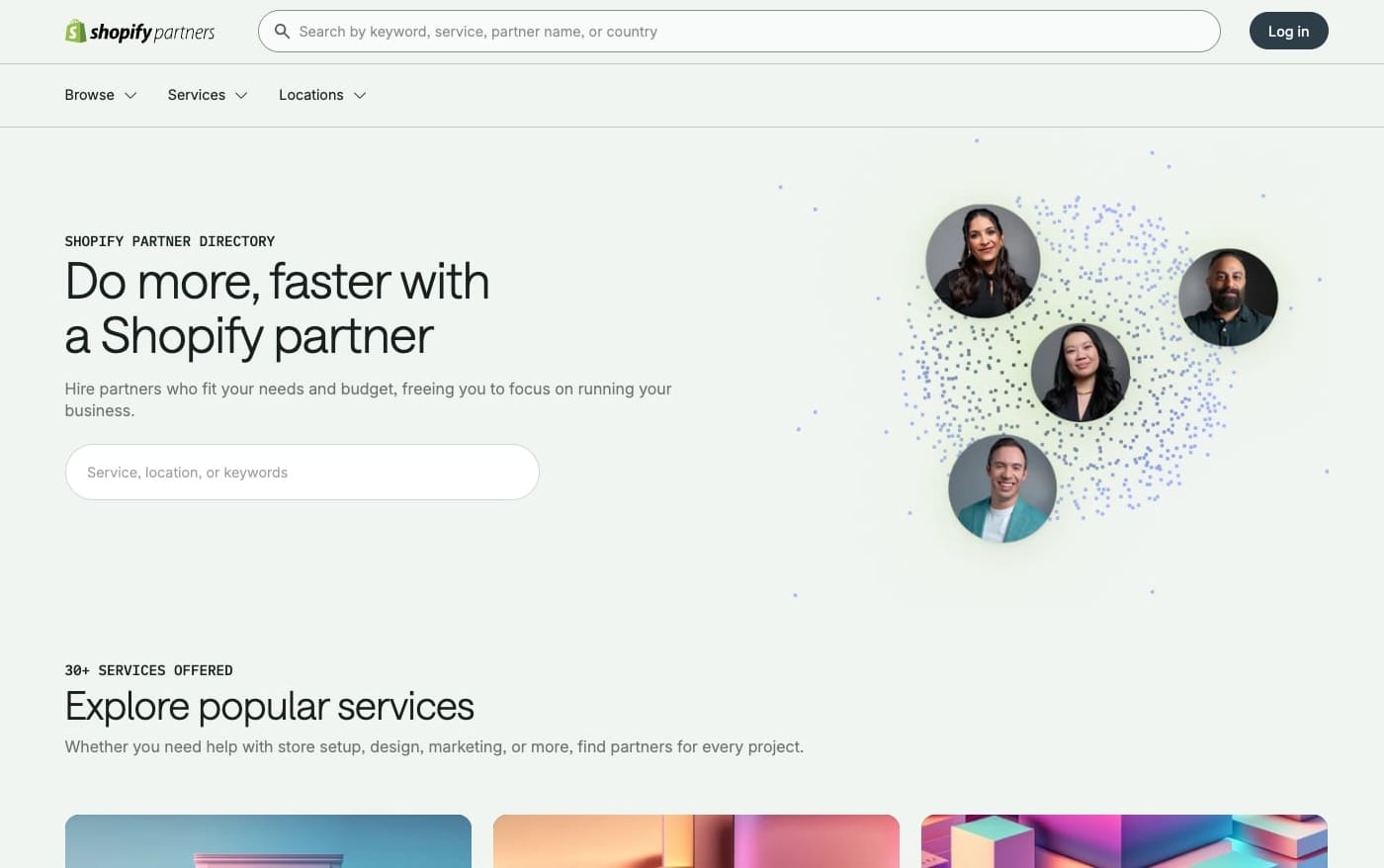
Shopify Partner Directory: Partners here are vetted based on performance, revenue generation, and certifications. Ideal for finding "Shopify Plus Partners" for high-stakes work.
Storetasker A vetted middle ground for freelancers. They match you with pre-qualified experts, removing the bidding war. Great for reliable, mid-sized projects.
Toptal For elite, senior engineering talent (top 3%). Expensive ($60–$200+/hr) and requires a ~$500 deposit, but guarantees speed and quality.
Upwork / Fiverr Best for commoditized, low-risk tasks. Requires you to act as the Project Manager and heavily vet candidates yourself.
Vetting Candidates: How to Ensure Quality and Compatibility?
Once you have a shortlist of candidates, you must dig deeper than surface-level aesthetics. In a stratified market, a "good" developer for a basic theme setup might be disastrous for a complex headless build. Use this framework to ensure true compatibility.
Audit the Portfolio for Relevance, Not Just Style
Don't just look for pretty stores; look for projects that match your specific technical scope and industry.
- Scope Match: If you are planning a headless build, verify they have deployed Hydrogen or React storefronts, not just standard Liquid themes. A Liquid developer cannot simply "figure out" a headless architecture on the fly.
- Results-Driven Case Studies: Look for evidence of measurable problem solving—such as increased conversion rates or improved Core Web Vitals—rather than just design screenshots.
Verify Technical Depth & TCO Awareness
A true expert protects your long-term budget by building efficient solutions.
- Total Cost of Ownership (TCO): Ask how they handle feature requests. A low-quality dev will install five different monthly subscription apps to solve a problem. A high-quality expert will code those features directly into the theme to avoid the "App Tax" and reduce your monthly overhead.
- Stack Proficiency: explicitly ask if they specialize in "Liquid" (standard themes) or "Headless" (custom frontends). Ensure their skills map strictly to your tech stack requirements.
Assess Operational Reliability (The "Bus Factor")
Talent is useless without reliability. You need to know what happens when things go wrong.
- The "Bus Factor" of 1: If hiring a freelancer, ask about their backup plan. If they get sick or vanish, do you have access to the code repo? Agencies mitigate this risk by providing a "bench" of talent, ensuring continuity if a lead developer steps away.
- Communication Protocols: Test their responsiveness early. Clear, professional communication is often a better predictor of project success than raw coding speed.
Validate with a Trial Project
For larger engagements (e.g., migrations or full builds), never commit to a 6-month contract immediately. Propose a small, paid "discovery" task—such as a site audit or a single feature implementation.
This allows you to evaluate their code quality, communication style, and adherence to deadlines with minimal risk before signing the full agreement.
Our Offer: If you are unsure where to start, we can help prove our value upfront. Start your free trial and get 3 experiments for free with our Conversion Rate Optimization services to see how we work and the results we can deliver before you commit to a larger scope.
Tips for a Successful Partnership
Nurturing a successful partnership ensures your project stays on track and delivers ROI, not just code. Here is how to manage the relationship effectively.
Prepare a Precise Brief to Avoid "Scope Creep" Vague requirements lead to "scope creep," which kills budgets and timelines.
- Be Specific: clearly outline your goals, functional requirements, and budget. In 2026, top-tier agencies often have strict project minimums (e.g., $10,000–$20,000), so a loose brief may be rejected outright.
- Formal Contract: Always use a contract that clearly outlines the scope of work, payment terms, and intellectual property rights. This protects you from disputes later.
Budget for the "App Tax" A common pitfall is budgeting only for the developer's time while ignoring the ecosystem costs.
- The Hidden Cost: Custom functionality often requires paid apps. Enterprise stacks can easily exceed $1,000/month in app fees alone.
- The Developer's Role: Challenge your partner to build features natively into the theme where possible. A higher upfront development cost can save you thousands in recurring app subscriptions over the life of the store.
Synchronize Communication for Agile Delivery Effective communication is vital, especially if you are leveraging global talent arbitrage.
- Timezone Overlap: If you hire offshore (e.g., Eastern Europe or Asia) to save money, ensure you have overlapping working hours for real-time collaboration. Delays in feedback loops can double your project timeline.
- Regular Check-ins: Schedule daily or weekly updates to track progress against milestones. This prevents misunderstandings and keeps the "Bus Factor" low.
Define Milestones and Realistic Timelines Break the project into smaller, manageable stages with clear deliverables (e.g., "Design Approval," "Staging Site Beta," "Go-Live").
- Buffer Time: Work with your expert to establish a feasible schedule that includes buffer time for unforeseen issues, such as API limit hitting or third-party app conflicts.
- Payment on Deliverables: Tie payments to these specific milestones rather than just time elapsed to align incentives.
Frequently Asked Questions
Q: How much does a Shopify expert cost per hour in 2026? A: Rates vary significantly by region and expertise. Junior offshore developers may charge $15–$25/hr, while senior architects in North America or Western Europe typically command $150–$250+ per hour.
Q: What is the difference between Liquid and Headless developers? A: Liquid developers work with Shopify’s native theme engine and charge less ($25–$75/hr). Headless developers are full-stack software engineers (React/Node.js) who build custom frontends, commanding premium rates ($120–$250+/hr).
Q: Why do agencies charge more than freelancers? A: Agencies provide a safety net. You are paying for a team ("bench strength"), Project Management, Quality Assurance (QA), and continuity. This reduces the risk of your project stalling if a single developer becomes unavailable.
Q: What is the "App Tax"? A: This refers to the monthly cost of third-party apps used to add functionality. A skilled expert can code features directly into your theme, increasing upfront costs but saving you thousands in monthly app subscription fees over time.
Q: How much should I budget for a Shopify Plus migration? A: A full enterprise migration from platforms like Magento or Salesforce to Shopify Plus typically costs between $80,000 and $150,000+, depending on data complexity and ERP integrations.


